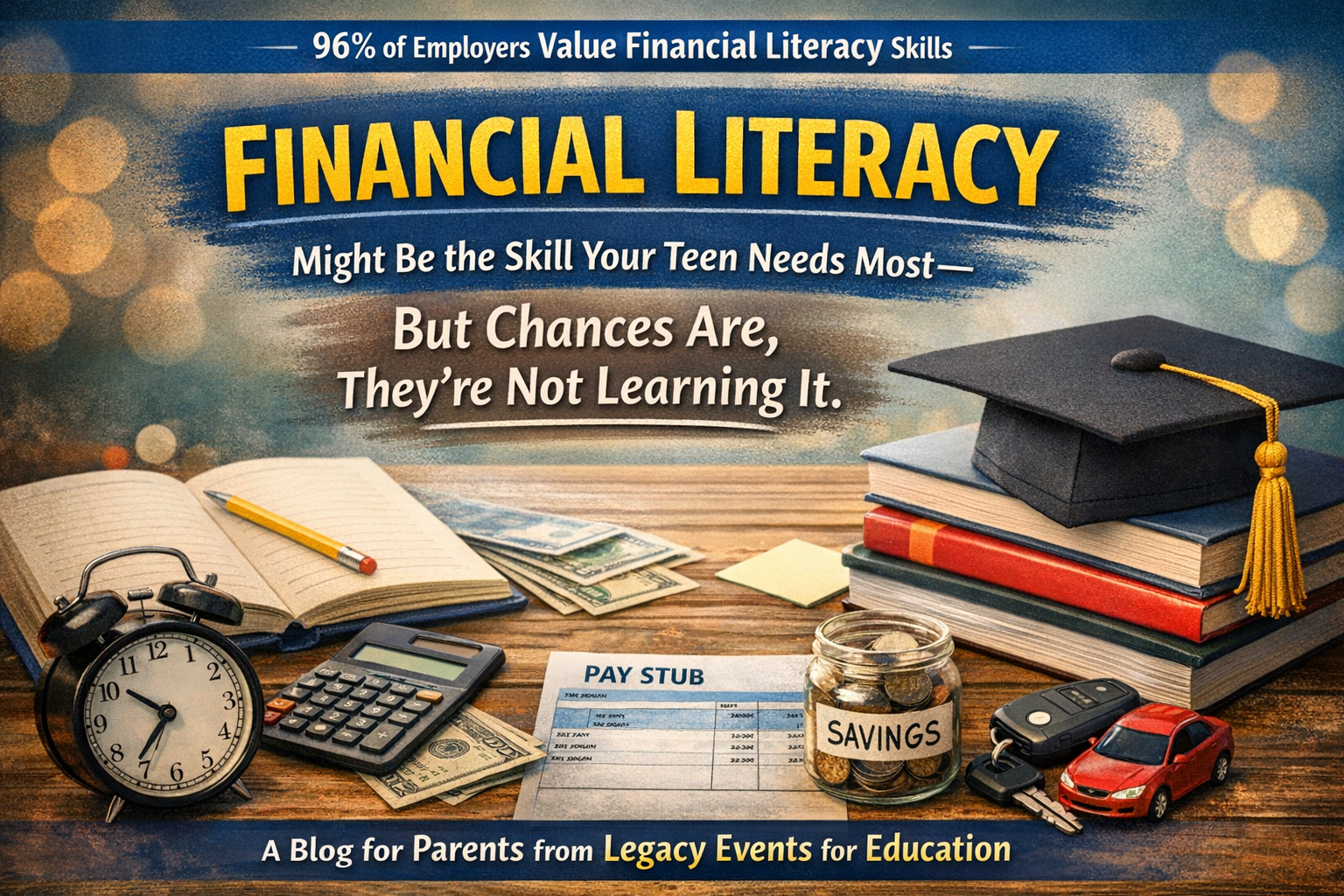
**Financial Literacy Might Be the Skill Your Teen Needs Most—
But Chances Are, They’re Not Learning It**
Let me ask you something as a parent.
Do you know if your teenager understands how a credit card actually works?
Not just “it’s easy to get into debt,” but what happens if you only make minimum payments?
Or how to read a paycheck?
Or what it really costs to finance a car?
Most parents I talk to say the same thing:
“They’re not really learning that anywhere.”
And that’s the part that feels a little unsettling—because these are the exact decisions they’ll be making soon, whether we feel ready or not.
Why This Matters More Than We Think
We spend a lot of time helping our kids prepare for the future—grades, college applications, extracurriculars.
But one area that often gets missed is how money actually works in real life.
And yet, it comes up everywhere.
In fact, a recent report found that 96% of hiring managers say financial literacy is a valuable skill for entry-level employees. [uschamber.com]
Not because they expect kids to be financial experts—but because understanding money helps with:
- Decision-making
- Stress management
- Confidence
In other words, it’s a life skill that shows up long before—and long after—the first job.
What Your Kids Are Walking Into
If you’ve ever talked to someone in their late teens or early 20s, you’ve probably noticed something:
A lot of them feel overwhelmed when it comes to money.
And it’s not hard to understand why.
They’re dealing with:
- Student loans they didn’t fully understand when they signed
- Credit cards that felt easy to use—but hard to manage
- Big financial decisions with long-term consequences
This isn’t about responsibility or motivation.
It’s about the fact that most of them just haven’t been taught how to think through these things yet.
College, Trades, and the Bigger Question
As parents, one of the biggest conversations we have is:
“What should my child do after high school?”
College? Trades? Something else?
But more and more, the better question is:
“Does my child understand the financial impact of the path they’re choosing?”
Because the reality is:
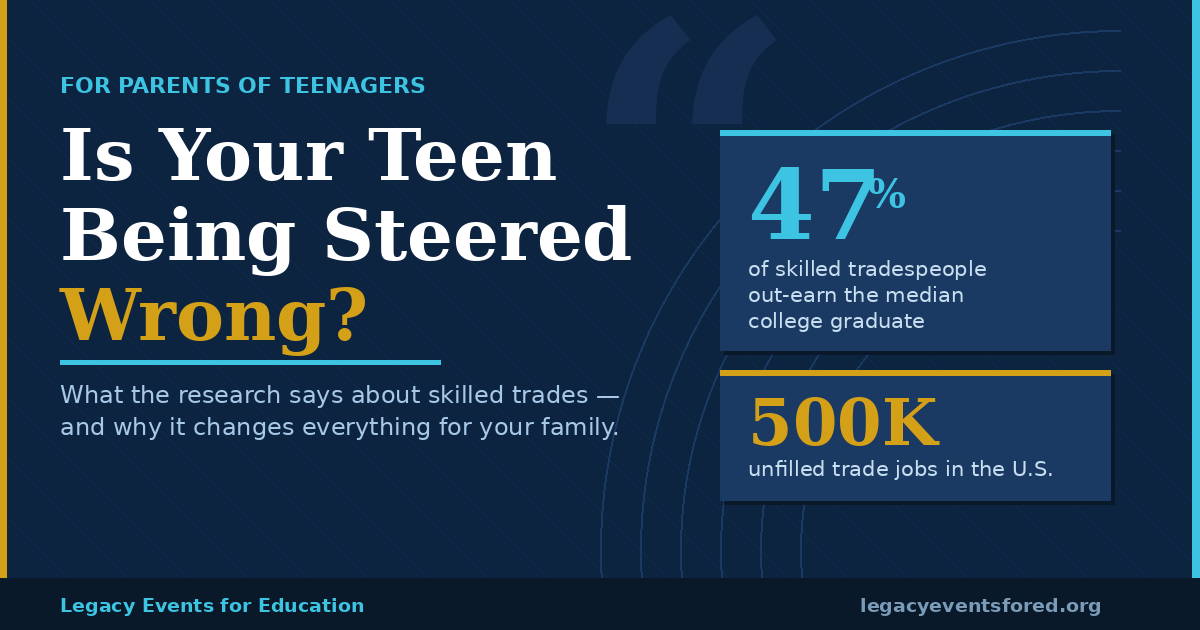
- College can open doors—but often comes with significant debt
- Trades can offer strong earning potential—often with less debt and faster income
There’s no one-size-fits-all answer.
But there is a big advantage if your child knows how to evaluate:
- What something costs over time (not just upfront)
- How long it takes before they’re earning money
- What their monthly obligations will actually look like
That’s the kind of thinking that makes a huge difference later.
What Financial Literacy Actually Looks Like (In Real Life)
This isn’t about complicated spreadsheets or investing strategies.
It’s much simpler than that.
It’s things like:
- Knowing how checking and savings accounts work
- Understanding how interest builds (or works against you)
- Knowing how a credit score is built—and how easy it is to damage
- Looking at a loan and asking, “What’s this really going to cost me?”
These are everyday skills.
And most teenagers just aren’t getting consistent exposure to them.
Why Many Parents Feel Stuck
A lot of parents want to teach this stuff—but aren’t sure where to start.
Maybe no one walked you through it, either.
Or maybe financial conversations just weren’t something families talked about growing up.
That’s completely normal.
The good news is—it doesn’t have to be perfect.
Even small conversations can go a long way.
How Legacy Is Helping Fill the Gap
At Legacy Events for Education, we see this gap every day when working with students and families.
That’s why we’re expanding beyond in-person workshops and launching something new:
👉 Our online financial literacy class will be launching this summer
It’s designed specifically for middle school, high school, and college-aged students—and built around one goal:
Help them understand money before life starts expecting them to.
Simple. Practical. Real-world.
If you’d like updates as it launches, you can follow along here:
- 🌐 Visit Legacy Events for Education
- 📱 Search Legacy Events for Education on Facebook
We’ll be sharing details, timing, and how to get involved.
A Few Easy Ways to Start This Week
You don’t need a full curriculum to begin.
Just start small:
- Ask simple questions
“Do you know what a credit score is?” is a great place to start. - Make it real
Look at what a typical student loan payment actually looks like together. - Talk through decisions out loud
Whether it’s a car, college, or a job—let them hear how you think through it. - Be open about your own learning
You don’t have to have all the answers. Showing the process matters.
The Bottom Line for Parents
This isn’t about turning your kid into a finance expert.
It’s about making sure they’re not guessing their way through some of the biggest decisions of their life.
Because eventually, they’re going to be managing:
- Their own paycheck
- Their own bills
- Their own choices
And the earlier they understand how it all works…
the more confident (and less stressed) they’ll be.